The Father about the Son
Historical Document from the Family Archive
The following text comes from the personal records of Julius Mieses, the father of Jacques Mieses. It is a rare testimony that provides insight into the childhood and youth of the later chess grandmaster – written from the loving but also critical perspective of a father.
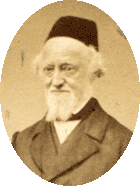
Childhood 1865
"On February 27, 1865, our first child was born, a son: Jacques (Jakob). He developed well and became a very handsome boy, a lively whirlwind, it was difficult to raise him."
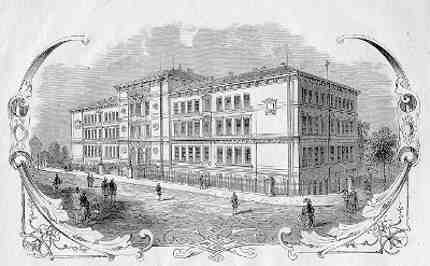
"He then attended the civic school at Augustusplatz, where the director and teachers had much to endure from him; Cantor Liebling also gave him lessons, but not much of it remained with him."
The Thomas Gymnasium Leipzig
"Later he went to the Thomas Gymnasium, where in the first classes he was less than willing to learn well. Director and teachers always had cause to complain, they gave him a tutor and a student to help."
"In the higher and final gymnasium classes the picture changed, he had very good comprehension and talent, passed the final examination cum laude and received a prize."
"He also learned Gabelsberger shorthand, became an excellent stenographer, also learned various games easily, especially the serious game of chess, in which he excelled remarkably and acquired mastery, especially as a blindfold player of the first rank."
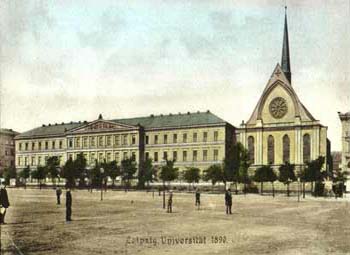
University & Chess Career Leipzig & Berlin
"Later he attended the universities in Leipzig and Berlin, studied physics and chemistry for several years, but he had chosen an ungrateful, unrewarding course of study, he and his friend Galenkampf, with whom he studied together, finally gave it up."
"His main occupation is the game of chess, he is a newspaper correspondent for several newspapers and editor of a chess magazine, has published several chess works and textbooks with the publisher Philipp Reclam jun."
"He participated in many tournaments in England, France, Italy, Germany, Austria and Russia, where he also won many prizes. The game is now spread throughout the world and developed into a science, just like the war game and many other such games. One can win laurels in all of them."
Historical Context
Julius Mieses came from Brody (then Austria-Hungary, now Ukraine) and settled as a merchant in Leipzig. He was proud of his son's academic achievements, even though he probably viewed his career choice – chess – with mixed feelings.
"Blindfold player" refers to the ability to play chess without looking at the board – a discipline in which Mieses particularly excelled. He gave simultaneous exhibitions where he played against several opponents simultaneously while blindfolded.
"A lively whirlwind"