The Lasker–Mieses Match
Leipzig, 30 December 1889 to 6 January 1890
Play took place at the Centralhalle in Leipzig from 30 December 1889 to 6 January 1890. The match came about through a challenge from Mieses, and Lasker travelled from Berlin to Leipzig at his invitation. The condition was that the winner should be the first to win five games; the stakes were 450 marks.
Eight games were played. Lasker won five, Mieses none, and three were drawn. Those three were not played to a finish but broken off as drawn after the number of moves given in the table below. Lasker had turned twenty-one six days before the first game; Mieses was twenty-four.
The final score suggests a one-sided contest. The annotations that the Deutsches Wochenschach printed two weeks after its summary report tell a different story.
Source: Deutsches Wochenschach, nos. 3 and 4, 26 January 1890, pp. 22 f.
The Terms
| Item | Detail | Source |
|---|---|---|
| Players | Emanuel Lasker (Berlin) against Jacques Mieses (Leipzig) | DWS nos. 3 and 4, 26 Jan 1890, p. 22 |
| Venue | Centralhalle, Leipzig | ibid. |
| Dates | 30 December 1889 to 6 January 1890 | game headings ibid., pp. 26 and 32 |
| Format | First player to win five games | ibid., p. 22 |
| Stakes | 450 marks | ibid. |
| Result | Lasker 5, Mieses 0, three draws | ibid., pp. 22 f. |
Before the Match
Both players had come out of the same summer. At the sixth congress of the German Chess Federation at Breslau in July 1889 Mieses had taken third prize in the masters’ tournament with 10½ out of 17, behind Tarrasch and Burn and ahead of Blackburne, Gunsberg, Mason, Schallopp, Schiffers, von Bardeleben and Paulsen; the prize was 500 marks. At the same congress Lasker won the Hauptturnier and with it the title of master. (Deutsches Wochenschach, nos. 31/32, 4 August 1889, p. 274 and pp. 275 f.)
From late November to early December 1889 Lasker played Curt von Bardeleben at the Café Kaiserhof in Berlin for a prize of one hundred marks, put up by chess friends “who clubbed together to raise the necessary money for the purpose” („welche das nötige Geld zu diesem Zwecke zusammenschossen“). Von Bardeleben resigned the match because he was unwell. (Deutsches Wochenschach, nos. 3 and 4, 26 January 1890, p. 22)
A few weeks later came the Leipzig match. The journal described how it had been arranged:
“The contest took place as the result of a challenge on the part of Herr Mieses, who during an earlier stay in Berlin had already expressed the wish to cross swords with one of the Berlin masters, and it was at his invitation that E. Lasker went to Leipzig.”
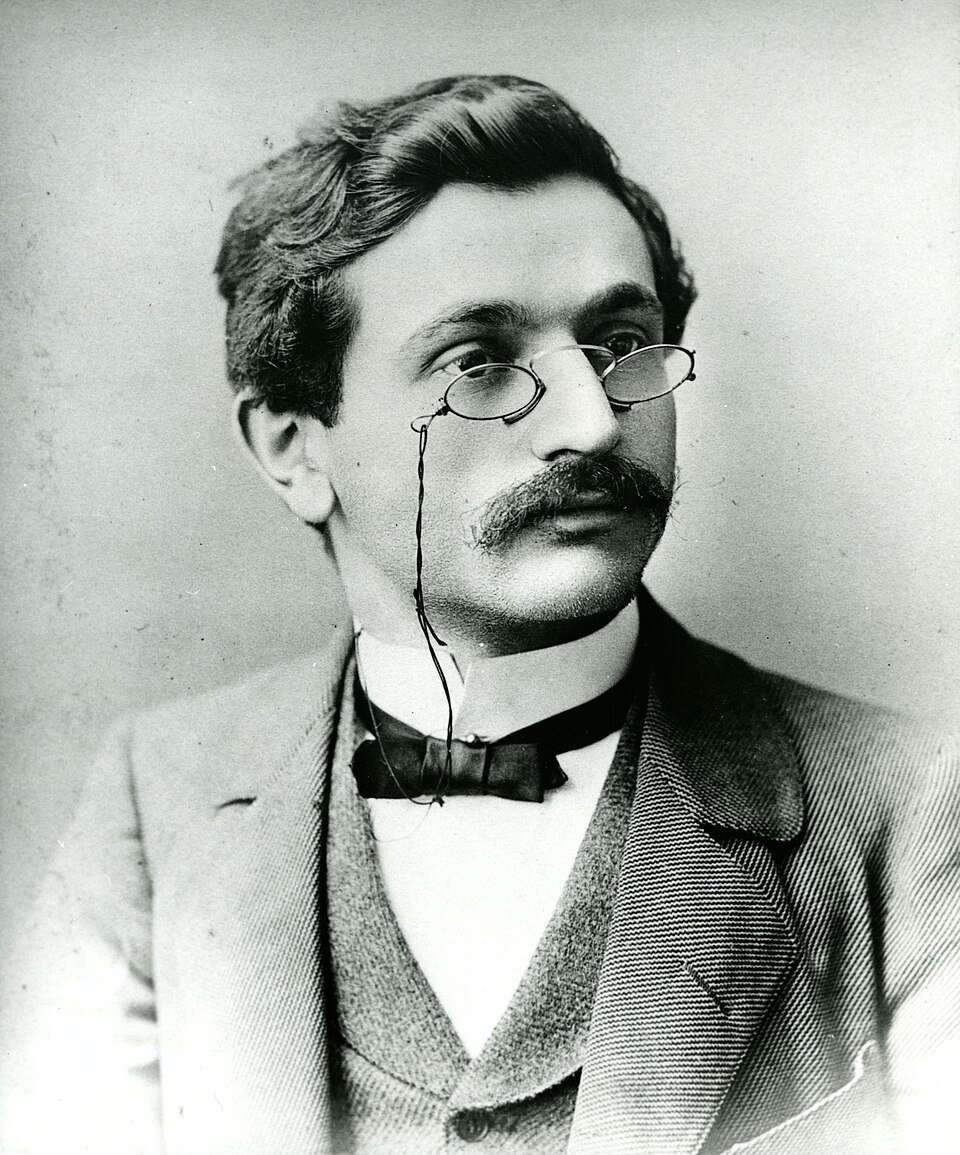
Lasker had turned twenty-one on 24 December 1889, six days before the first game. Mieses, born on 27 February 1865, was twenty-four.
The Eight Games
Play was spread over six days; on 4 and on 6 January two games were played on the same day. Games 2, 3 and 6 were not played to a finish but broken off as drawn after the number of moves shown.
| No. | Date | White | Black | Opening per DWS | Result | Moves |
|---|---|---|---|---|---|---|
| 1 | 30 Dec 1889 | Lasker | Mieses | Dutch Defence | 1–0 | 24 |
| 2 | 31 Dec 1889 | Mieses | Lasker | Vienna Game | ½–½ | 55 |
| 3 | 2 Jan 1890 | Lasker | Mieses | Queen’s Gambit | ½–½ | 58 |
| 4 | 3 Jan 1890 | Mieses | Lasker | Vienna Game | 0–1 | 42 |
| 5 | 4 Jan 1890 | Lasker | Mieses | Zukertort Opening | 1–0 | 30 |
| 6 | 4 Jan 1890 | Mieses | Lasker | Vienna Game | ½–½ | 33 – playable below |
| 7 | 6 Jan 1890 | Lasker | Mieses | Queen’s Gambit | 1–0 | 37 |
| 8 | 6 Jan 1890 | Mieses | Lasker | Vienna Game | 0–1 | 25 |
| Final score: Lasker 5, Mieses 0, three draws. | ||||||
The headings of game no. 780 (the fourth game) and game no. 782 (the sixth) both carry the year 1889 instead of 1890 in the original. These are misprints.
Four Games with White, One Opening
In all four games in which he had White, Mieses played the Vienna Game, three of them following the same move order as far as the fifth move. The journal put it plainly: Mieses opened, as in every game, with the Vienna („J. Mieses eröffnete, wie in allen Partien, mit dem Wiener Spiel.“).
Half a year earlier the same opening had brought him six points out of seven games at Breslau.
The move order itself was long-standing with him: 1.e4 e5 2.Nc3 Nc6 3.g3 Bc5 4.Bg2 a6 5.Nge2 — the same five moves open his winning game against Siegbert Tarrasch of 3 December 1888, played in the jubilee tournament of the Augustea chess club in Leipzig. Only then do the two games part company: there Black continued 5…Nf6, here 5…d6. (Deutsche Schachzeitung, no. 1, January 1889, pp. 17 f., game no. 5159)
The Sixth Game
One of the eight games is reproduced here: the sixth, played on 4 January 1890, with Mieses as White. Two things recommend it. The Deutsches Wochenschach called it one of the most interesting games of the whole match. And it is one of two games in which, on the journal’s own annotations, it was Mieses rather than Lasker who stood better and should have won.
Game 6: Mieses – Lasker, Vienna Game
Leipzig, 4 January 1890. Broken off as drawn after 33 moves.
Game details and notation
| White | Jacques Mieses |
|---|---|
| Black | Emanuel Lasker |
| Event | Lasker – Mieses match, Leipzig |
| Date | 4 January 1890 |
| Round | 6 |
| Opening | Vienna Game (ECO C25) |
| Result | ½–½ |
| Source | Deutsches Wochenschach, nos. 3 and 4, 26 January 1890, game no. 782, pp. 30 f. |
1.e4 e5 2.Nc3 Nc6 3.g3 Bc5 4.Bg2 a6 5.Nge2 d6 6.d3 Be6 7.O-O Nge7 8.Nd5 O-O 9.Nxe7+ Qxe7 10.Kh1 Rad8 11.Nc3 f6 12.f4 Qd7 13.f5 Bf7 14.g4 Qe8 15.g5 Kh8 16.Qg4 Rd7 17.Qh4 Qd8 18.Rf3 Nb4 19.Rh3 Bg8 20.Bd2 d5 21.Qg4 fxg5 22.exd5 Be7 23.d6 Bxd6 24.Ne4 Be7 25.Bxg5 Nd5 26.Nc5 Bxg5 27.Nxd7 Qxd7 28.Qxg5 Nf4 29.Rg3 Rxf5 30.Qg4 Nxg2 31.Kxg2 Qc6+ 32.Kg1 g6 33.Qe2 Qb6+ 1/2-1/2
The annotations in the viewer are in German: they are the source text of the Deutsches Wochenschach and have been left in the original.
On the twentieth move the annotator records that Black had hemmed himself in and that White had “obtained a strong attacking position by consistently exploiting Black’s mistakes” („durch konsequente Ausnutzung der Fehler des Nachziehenden eine starke Angriffsstellung erhalten“). At that point, he goes on, Mieses played “not energetically enough” („nicht energisch genug“): instead of the 20.Bd2 played, the journal recommends 20.g5–g6 and sets out a winning line running to nine moves.
That line is not reproduced here. The transcription available of the subsidiary variation is uncertain in several places and contains an inconsistency; it is still being checked against the original scan.
On the twenty-first move the annotator notes that 21.Qg4 prepares the win of the exchange on move 27, but that the exchange on d5 would have been simpler and stronger. At the end, after 33…Qb6+, the game was broken off as drawn: Black wins the b-pawn, which in the journal’s judgement leaves the prospects roughly equal.
Deutsches Wochenschach, nos. 3 and 4, 26 January 1890, game no. 782, pp. 30 f. The heading in the original carries the year 1889 in error.
What the Other Annotations Show
Mieses also had White in the fourth game, on 3 January. Of the thirtieth move the annotations say:
“White could of course have won easily; d3—d4 decided the game at once. From here on White plays with remarkable feebleness.”
He went on to lose the game in 42 moves.
In the second game, on 31 December, the position was reversed. Mieses again had White, but this time it was Lasker who let the win slip more than once. The journal writes that he played “very carelessly, in an over-confident expectation of winning” („in allzusicherer Hoffnung auf Gewinn sehr leichtsinnig“), and of his forty-ninth move it says curtly: “This move is a mistake” („Dieser Zug ist ein Fehler.“). The game was broken off as drawn after 55 moves.
Mieses thus stood better and should have won in two of his four games with White. The 5–0 score does not show it.
Heyde’s Verdict
The summary report is signed “Berlin, January 1890. Albert Heyde.” It closes with an assessment that celebrates the winner without taking the score at face value:
“The young Berlin master, who first drew general attention to himself only at the Breslau congress, has thus won a glorious victory; and although I do not suppose that a defeat so terrible for the Leipzig master, who was evidently not in good form, corresponds to the real difference in strength between them, I believe I may nevertheless assert that Herr E. Lasker, who also possesses a pronounced talent for mathematics, has a great future ahead of him in chess.”
Lasker supplied the games to the journal himself and was listed as a regular contributor from that same issue onwards.
Afterwards
The first notice in the Deutsches Wochenschach ran to three lines. Issue no. 2 of 12 January 1890 reported that a match had recently taken place in Leipzig between the Berlin master E. Lasker and the Leipzig master J. Mieses, from which the former had emerged the winner by 5–0 with 3 draws. The report, the assessment and the games followed a fortnight later.
Six weeks after the match the news reached England. On 18 February 1890 the Liverpool Daily Post introduced Lasker ahead of his match against H. E. Bird and listed his credentials: the win in the Hauptturnier at Breslau, second prize at Amsterdam behind Amos Burn — and the win over Mieses:
“Since carrying off these honours, Herr Lasker has added to his laurels by beating Herr Mieses, the winner of the third place in the Breslau International Tournament.”
In that list Mieses does not appear as a loser but as the man who took third place at Breslau. In England the win over him counted as evidence of Lasker’s standing.
Sources
- Deutsches Wochenschach, 1890, edited by E. Schallopp, Albert Heyde and B. Hülsen: no. 2, 12 January 1890, p. 20 (first notice); nos. 3 and 4, 26 January 1890, pp. 22 f. (report, terms, background, Heyde’s verdict) and pp. 26–32 (the eight games with annotations, among them no. 780 on pp. 28 f. and no. 782 on pp. 30 f.).
- Deutsches Wochenschach, nos. 31/32, 4 August 1889, p. 274 (Lasker’s win in the Hauptturnier at Breslau) and pp. 275 f. (Mieses’ third prize in the masters’ tournament).
- Liverpool Daily Post, 18 February 1890, p. 6 (introduction of Lasker before the match against H. E. Bird).
- Deutsche Schachzeitung, no. 1, January 1889, pp. 17 f., game no. 5159 (Mieses against Tarrasch, Leipzig 1888, for the opening moves).
Two misprints in the original should be noted: the headings of games no. 780 and no. 782 both carry the year 1889 instead of 1890.
From the Upcoming Biography
The match against Lasker is covered in the Mieses biography by Johannes Geppert (coming spring 2027 from Hentrich & Hentrich Verlag Berlin Leipzig).
More about the biography & newsletter