The Mieses–Janowski Match
Paris, 8 January to 4 February 1895
Format and Conditions
The match ran from 8 January to 4 February 1895 at the Café de la Régence, 161 Rue Saint-Honoré in Paris. The start had been put back by a week. The Deutsche Schachzeitung printed the conditions in its January issue:
- The winner is the first player to win seven games. The first four draws do not count; every further draw counts ½.
- Time limit: 18 moves per hour.
- Play daily from 1.30 to 6.30 pm, except Tuesdays and Sundays. Exception: Tuesday 8 January as the opening day.
- Stakes: 800 francs a side.
These are already the revised terms. The conditions were altered while the match was in progress: from 20 to 18 moves per hour, the daily session shortened from six hours to five, and Tuesday added as a further rest day. The Deutsche Schachzeitung already gives the amended figures.
Play did not take place in the public room of the café but in a quiet back room. Admission was restricted to the seconds, the backers, members of the press and holders of special cards; the daily results were posted publicly in the café itself. These details rest on contemporary press reports.
Source for the conditions: Deutsche Schachzeitung, no. 1, January 1895, p. 27.
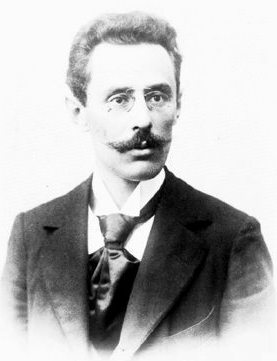
The Match
The opening phase went badly for Mieses. After five games Janowski led by three wins to one, with one game drawn. The fifth game ended in stalemate.
Then the picture reversed. Mieses won games 6, 7, 8 and 9 in succession and led five to three, two wins short of taking the match. Game 10 was drawn after two sittings.
Janowski replied with three straight wins of his own — games 11, 12 and 13 — to lead six to five. Mieses won the fourteenth and final game on 4 February to make it six all. Janowski had White in the odd-numbered games, Mieses in the even-numbered ones.
| Game | Date 1895 | White | Black | Opening | Result | Source of score |
|---|---|---|---|---|---|---|
| 1 | 8 Jan | Janowski | Mieses | Ruy Lopez | 1–0 Janowski | DSZ no. 5783 |
| 2 | 9 Jan | Mieses | Janowski | Alapin Opening (2.Ne2) | 0–1 Janowski | DSZ no. 5784 |
| 3 | 10 Jan | Janowski | Mieses | Queen’s Pawn Game (Stonewall) | 0–1 Mieses | DSZ no. 5785 |
| 4 | 11 Jan | Mieses | Janowski | Vienna Game | 0–1 Janowski | DSZ no. 5786 |
| 5 | 12 Jan | Janowski | Mieses | Ruy Lopez | ½–½ (stalemate) | DSZ no. 5787 |
| 6 | 14 Jan | Mieses | Janowski | Vienna Game | 1–0 Mieses | DSZ no. 5793 |
| 7 | 17 Jan | Janowski | Mieses | Ruy Lopez | 0–1 Mieses | DSZ no. 5794 |
| 8 | 18/19 Jan | Mieses | Janowski | Vienna Game | 1–0 Mieses | Press |
| 9 | 21 Jan | Janowski | Mieses | Ruy Lopez (7.d4) | 0–1 Mieses | DSZ no. 5815 |
| 10 | 24/26 Jan | Mieses | Janowski | Vienna Game | ½–½ | Press |
| 11 | 26 Jan | Janowski | Mieses | Ruy Lopez | 1–0 Janowski | DSZ no. 5795 |
| 12 | 1 Feb | Mieses | Janowski | Vienna Game | 0–1 Janowski | DSZ no. 5796 |
| 13 | early Feb | Janowski | Mieses | Three Knights Game | 1–0 Janowski | Press |
| 14 | 4 Feb | Mieses | Janowski | Vienna Game | 1–0 Mieses | DSZ no. 5797 |
| Final score: Mieses 6, Janowski 6, 2 draws — the match was drawn. | ||||||
Two Players, One Temperament
Part of the reason the match swung so violently was that the two men across the board shared the same strength and the same weakness. Looking back on the contest, the Deutsche Schachzeitung observed that both had “a naturalistic streak, troubling themselves little about the principles laid down by theory and preferring to go their own way” („Beide haben einen naturalistischen Zug, indem sie sich nur wenig um die von der Theorie aufgestellten Principien kümmern, sondern es lieben, ihre eigenen Wege zu wandeln.“, no. 3, 1895, p. 91).
From that shared instinct followed the shape of the match — long winning runs on both sides and hardly a draw:
“Janowski and Mieses are both very fond of attacking, but they are ill at ease in defence and usually seek their salvation in a bold counter-attack.”
The two remained linked afterwards: five years later Mieses beat Janowski at Paris 1900 in a Vienna Game that took the first brilliancy prize.
Illness and Decision
Both players were unwell at some point during the four weeks. Before game 10 a cable report noted an indisposition on Janowski’s side. Mieses fell ill during game 12, in the middle of Janowski’s closing run. Writing to New York on 5 February, he stated that his illness had cost him his chance of winning the match.
The schedule took its toll as well: game 8 lasted more than eight hours and had to be adjourned, and game 10 stretched over two sittings.
After Mieses levelled in the fourteenth game the score stood at six wins each with two draws — but under the conditions only a seventh win would have decided anything. Both men therefore agreed to a drawn match. A London report explained it plainly:
“both players have consented to make a draw of it, the score being six each and two draws. The match being seven games up, neither of them wanted to risk the stakes, 800 francs a-side, upon the issue of one game.”
Two Games to Play Through
Of the fourteen games, the two Mieses wins that turned the match are given here: the start of his comeback and the equalising win in the final game. He had White in both and opened with the Vienna Game.
Game 6: The Comeback Begins
The first of four consecutive wins. On the 25th move, a4, the Deutsche Schachzeitung notes that “White now finishes the game with a very elegant combination” („Weiss führt die Partie nun mit einer sehr eleganten Combination zu Ende.“). The final move, 28.Ng6+, is a discovered check from the queen on g7 that attacks the black queen at the same time. Brilliant and flawed at once: the same journal reproaches Mieses more than once in this game and points out, among other things, a simpler win available on move 17.
Game details and notation
| White | Mieses, Jacques |
|---|---|
| Black | Janowski, Dawid |
| Event | Wettkampf Janowski - Mieses, Paris, Café de la Régence |
| Date | 14 January 1895 |
| Round | 6 |
| Opening | Wiener Partie (ECO C28) |
| Result | 1–0 |
| Source | Deutsche Schachzeitung, 50. Jg. (1895), Nr. 3, S. 70-72, Partie Nr. 5793 |
1. e4 e5 2. Nc3 Nc6 3. Bc4 Nf6 4. d3 Bc5 5. Bg5 h6 6. Bh4 g5 7. Bg3 h5 8. h4! 8... g4 9. Qd2 a6? 10. f4 gxf3 11. Nxf3 Ng4 12. Nd5 12... d6 13. Rf1 f6? 14. Nh2! Rf8 15. Nxg4 Bxg4 16. Qh6 16... Nd4? 17. Kd2? 17... f5 18. Qh7 18... Rf7 19. Qg8+ Rf8 20. Qg6+ Kd7 21. c3 Ne2 22. Bf2 Bxf2 23. Rxf2 Ng3 24. Qg7+ Kc6 25. a4! 25... Rc8 26. a5! 26... Qxh4 27. Ne7+ Kd7 28. Ng6+ 1-0
Notation in English algebraic form, as in the viewer.
Game 14: Levelling at the Last
Janowski led by six wins to five; this game brought Mieses level. In its review the Deutsche Schachzeitung made it the model of his attacking style, saying he conducted the attack “in downright masterly fashion” and played the finish “in that tinglingly elegant manner which distinguishes him”. On the 17th move, h4, the annotations read: “Now Mieses is in his element: the stormy attack is driven home with all his force” („Jetzt ist Mieses in seinem Elemente: der stürmische Angriff wird mit aller Kraft geführt.“). After the 30th move Mieses announced mate in three; the moves that follow in the score were therefore not played over the board but are the announced mating line.
Game details and notation
| White | Mieses, Jacques |
|---|---|
| Black | Janowski, Dawid |
| Event | Wettkampf Janowski - Mieses, Paris, Café de la Régence |
| Date | 4 February 1895 |
| Round | 14 |
| Opening | Wiener Partie (ECO C25) |
| Result | 1–0 |
| Source | Deutsche Schachzeitung, 50. Jg. (1895), Nr. 3, S. 76, Partie Nr. 5797 |
1. e4 e5 2. Nc3 Nc6 3. g3 Nf6 4. Bg2 Bc5 5. d3 a6 6. Nge2 d6 7. h3 h6 8. O-O Bd7 9. Nd5! Nxd5 10. exd5 Nd4? 11. Nxd4 Bxd4 12. c3 Bb6 13. Kh2 Qe7 14. Qe2 O-O? 15. f4! Rae8 16. f5 f6 17. h4! 17... Rc8 18. g4 Kf7 19. g5 19... hxg5 20. Qh5+ Kg8 21. hxg5 fxg5 22. Be4 Qe8 23. Qg4! Kf7 24. Bxg5 Rh8+ 25. Kg2 Kg8 26. Rh1 Rxh1 27. Rxh1 c6 28. Qh4 Bd8 29. f6! 29... Bxf6 30. Bxf6 Kf7 31. Bg6+ Kxg6 32. Qg5+ Kf7 33. Qxg7# 1-0
Notation in English algebraic form, as in the viewer.
Leaving Paris
On his departure the proprietor of the Café de la Régence, Monsieur Néron, certified that Mieses had been “d’une courtoisie parfaite” and would leave good memories behind him. Mieses for his part praised the goodwill of the café’s regulars — but pointedly declined to extend the compliment to his opponent. After The Standard, London, February 1895.
Sources
- Deutsche Schachzeitung, vol. 50 (1895): no. 1, p. 27 (conditions, interim score); no. 2, pp. 42–48 (games 1–5) and p. 59 (final score); no. 3, pp. 70–76 (games 6, 7, 11, 12, 14) and pp. 91–92 (overall assessment); no. 5, pp. 139–140 (game 9).
- New York Herald, 5 February 1895, “A Drawn Match at Paris” (survey of all fourteen games).
- New York Tribune, 17 February 1895, p. 25 (games 12 to 14; Mieses’ letter about his illness).
- Evening Herald, 2 and 9 February 1895 (progress reports).
- The Standard, London, February 1895 (drawn match, departure from Paris).
- Contemporary reports in the New York press (venue and surrounding circumstances).
The Deutsche Schachzeitung reported the outcome as follows: “The Mieses–Janowski match was concluded on Monday 4 February. Each of the two players has won 6 games, while 2 games were drawn.” („Der Wettkampf Mieses-Janowski ist Montag den 4. Februar beendet worden. Jeder der beiden Spieler hat 6 Partieen gewonnen, während 2 Partieen remis wurden.“, no. 2, 1895, p. 59)
The exact issue dates of individual press reports are still being verified against the original scans.
From the Upcoming Biography
The match against Janowski is covered in the Mieses biography by Johannes Geppert (coming spring 2027 from Hentrich & Hentrich Verlag Berlin Leipzig).
More about the biography & newsletter