Images of Tournaments
In his tournament career spanning almost seven decades, Jacques Mieses participated in the most significant chess tournaments of the classical era – from Leipzig 1888 to Hastings 1946. These images show him among the greatest masters of his time, including world champions, future champions and legends of the game.
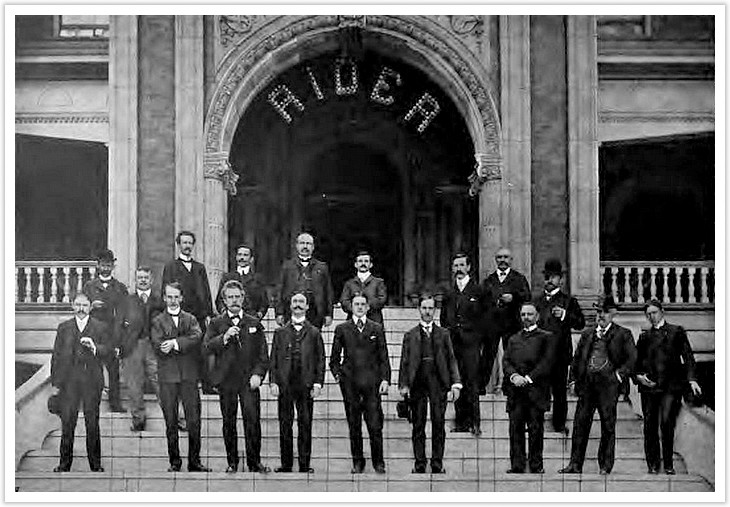
Cambridge Springs 1904
April–May 1904 16 Participants 15 Rounds
The first major international chess tournament of the 20th century in America. At the luxurious Hotel Rider – with over 500 rooms, a theater and ballroom – the world's strongest players gathered. Frank Marshall won surprisingly ahead of World Champion Lasker.
The European participants – including Mieses, Lasker, Schlechter, Chigorin and Janowski – had traveled together on the S.S. Pretoria to America. For Harry Nelson Pillsbury it was the last tournament of his career; Mieses defeated him in an impressive attacking game.
Persons depicted: H. Helms, H. Cassel, J. Redding, W. Van Antwerp, C. Schlechter, F.J. Marshall, Em. Lasker, M. Chigorin, J. Mieses, G. Marco, I. Rice, D. Janowsky, J.W. Showalter, A.B. Hodges, A.W. Fox, H.N. Pillsbury, T.F. Lawrence, W.E. Napier, R. Teichmann, H. Ridder, E. Delmar, J. Barry.
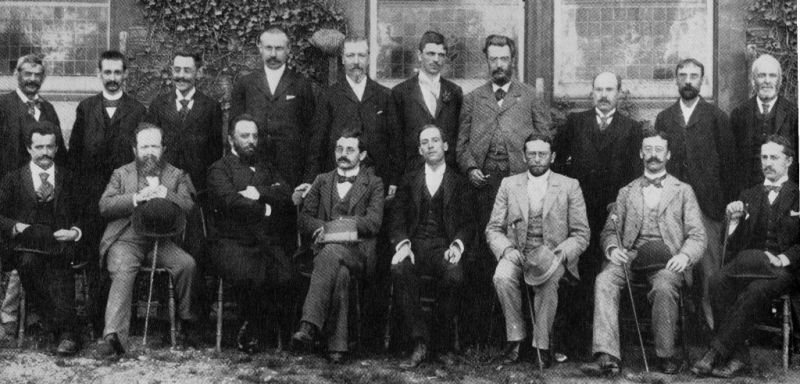
Hastings 1895 – 'The Tournament of the Century'
August–September 1895 22 Players 21 Rounds
The Hastings 1895 tournament was the strongest ever held: for the first time, World Champion Lasker, former champion Steinitz, Tarrasch and Chigorin all competed in a single event. The sensation was the victory of the 22-year-old American Pillsbury.
Mieses finished 20th with 7½/21, but drew against all four of the world's strongest players. He was the last surviving participant of this legendary tournament – when he returned to Hastings 50 years later, all 21 others had already passed away.
38 masters applied – only 22 were admitted. The tournament was held at the Brassey Institute under the patronage of the Duke of York.
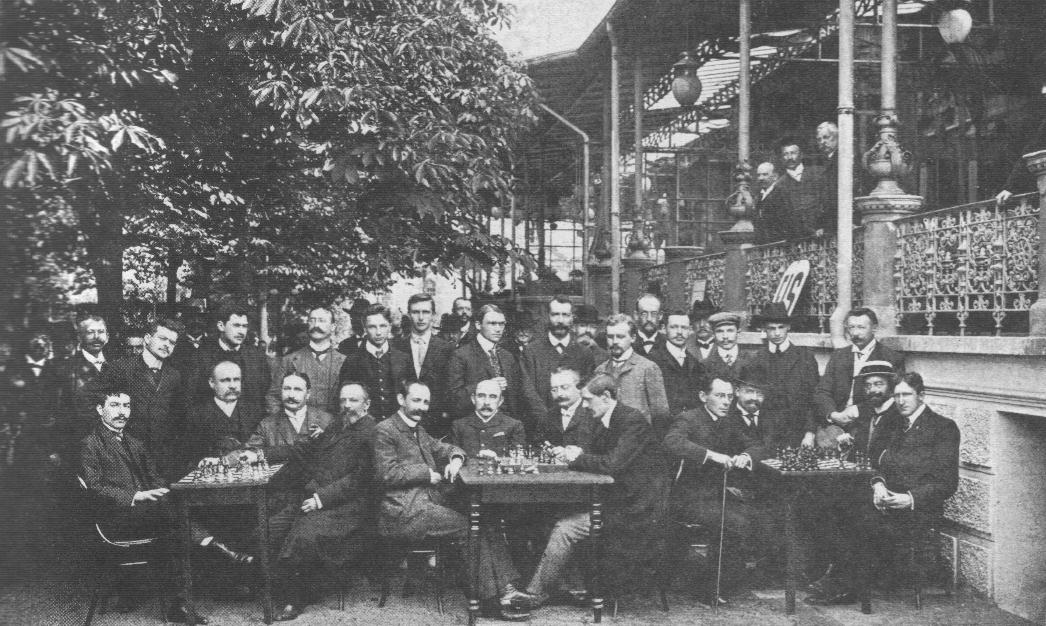
Karlsbad 1907
August–September 1907 21 Participants 20 Rounds
The Karlsbad Tournament 1907 was one of the strongest tournaments of the classical era – only Lasker and Tarrasch were missing. Here the chess world witnessed the breakthrough of a new generation: Akiba Rubinstein won convincingly ahead of Maróczy and proved that the "young ones" were equal to the established masters.
Mieses started promisingly and was among the leaders at halftime, but then fell back. Nevertheless, he showed some brilliant games. The tournament was also Mikhail Chigorin's last great appearance – the Russian master died in early 1908.
Seated (l-r): Rubinstein, Marco, Fähndrich, Chigorin, Schlechter,
Hoffer, Tietz, Maróczy, Janowski, Dr. Neustadtl, Drobny, Marshall.
Standing 2nd row: Nimzowitsch, Wolf, Mieses, Cohn, Johner,
Leonhardt, Salwe, Vidmar, Berger, Spielmann, Dus-Chotimirski, Tartakower, Dr. Olland.
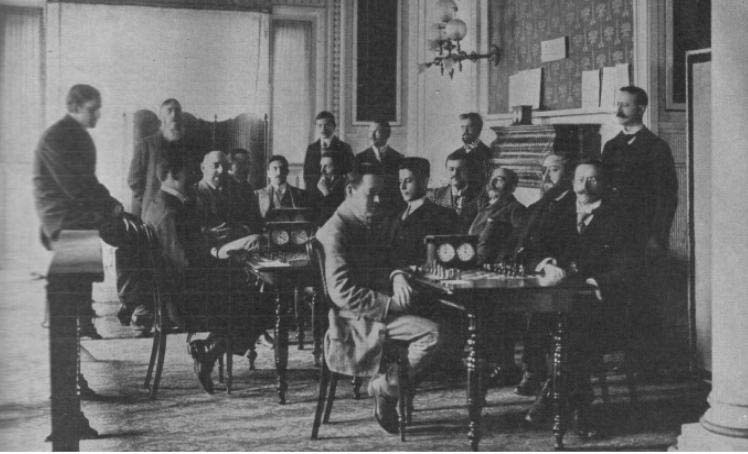
San Sebastián 1911
February–March 1911 Mieses as Organizer
This legendary tournament was Jacques Mieses' organizational masterpiece! As tournament director he set a new standard: He convinced the sponsor to reimburse all players for travel costs and accommodation – a revolution that became the norm for all later top tournaments.
The tournament at the Grand Casino assembled the world's top 10 – only Lasker was missing (he was getting married!). The sensational winner: the 22-year-old José Raúl Capablanca, who was still unknown in Europe. Bernstein and Nimzowitsch initially protested against his participation – but the Cuban proved his skill with a brilliant victory precisely against Bernstein!
At the railing: Marshall. Standing: Burn, Leonhardt,
Duras, Vidmar, Mieses.
Seated back: Janowski, Bernstein, Schlechter, Rubinstein,
Maróczy, Capablanca, Nimzowitsch, Hoffer, Teichmann.
Seated front: Spielmann, Tarrasch.
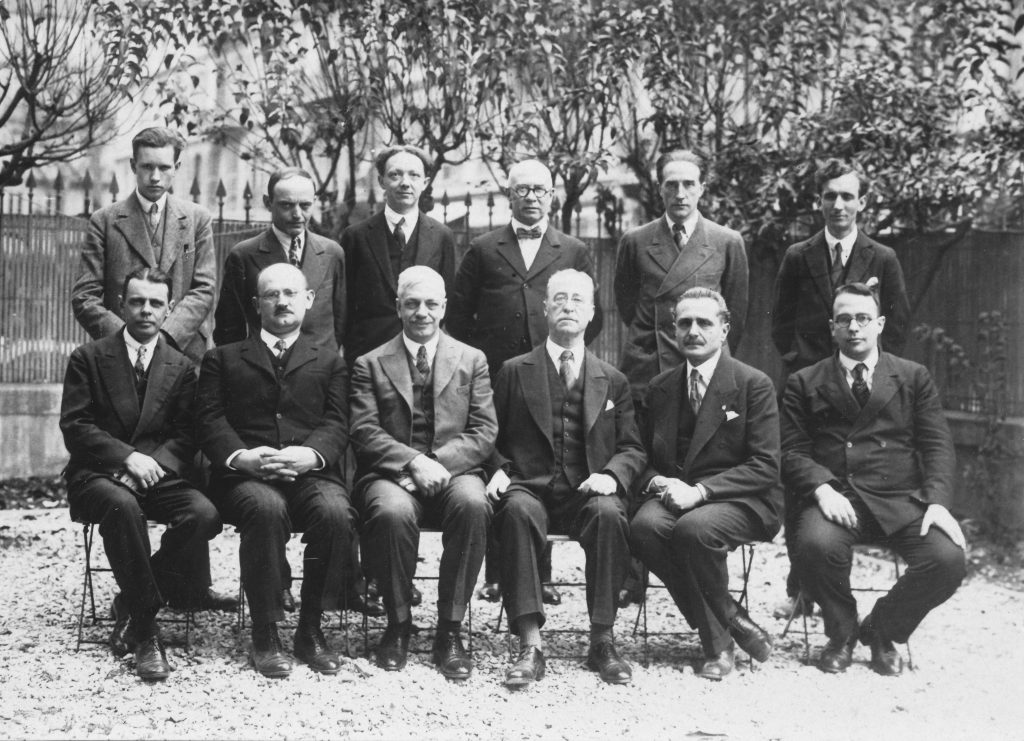
Nice 1931
1931 12 Participants
The Nice Masters Tournament of 1931 assembled an international field on the Côte d'Azur. The winner was Irishman Brian Reilly. Notable is the participation of French artist Marcel Duchamp, who alongside his avant-garde art was a serious tournament chess player.
For the 65-year-old Mieses, it was one of many tournaments during this phase of his career, when he tirelessly traveled across Europe and competed in every accessible event.
Standing: Daniel Noteboom, Abraham Baratz, George Renaud (Organiser),
Telling (Tournament Director), Marcel Duchamp, Brian Reilly (winner).
Seated: Eugene Znosko-Borovsky, Arpad Vajda, Sir George Thomas,
Jacques Mieses, Stefano Roselli del Turco, Jacob Adolf Seitz.
Mieses as Tournament Revolutionary
San Sebastián 1911 marked a turning point in chess history. Mieses' innovations – paid travel, free accommodation, fair prize money – created the foundation for professional tournament chess. Before this tournament, players often had to pay their own costs and only received prize money for placements. Mieses' model became the standard for all major tournaments that followed.
- Rubinstein – 14½/20
- Maróczy – 14/20
- Leonhardt – 12/20
- 4–5. Nimzowitsch, Schlechter
- 6. Vidmar
- ...
- 14–16. Berger, Mieses, Chigorin
- Capablanca – 9½/14 Brilliancy Prize
- Rubinstein, Vidmar – 9/14
- 4. Marshall – 8/14
- 5–6. Tarrasch, Maróczy
- ...
- Mieses – Tournament Director
"The young masters had their chance in Karlsbad against the crème de la crème of the world elite – and proved that they were more than equal. Rubinstein won. Nimzowitsch, Vidmar and Duras achieved top places. While great masters like Marshall, Janowski and Mieses sank to the middle or end of the table."
The years between 1907 and World War I are considered the pinnacle of classical tournament chess. Major tournaments in Karlsbad, San Sebastián, St. Petersburg and other cities regularly assembled the world elite. Mieses was present at almost all of them – as player, organizer or reporter.
These tournaments also shaped the stylistic conflict of the era: The "scientific" school (Tarrasch, Rubinstein) against the older romantics (Mieses, Chigorin) and the emerging "hypermoderns" (Nimzowitsch, Réti). Mieses remained true to his attacking style – even when the results sometimes suffered.